

Peak Detection & Placement for Defensible Fits
Peak detection & placement determines whether a fitted signal reflects real chemistry or a convenient curve. Use disciplined workflow for…
Read More →
Peak detection & placement determines whether a fitted signal reflects real chemistry or a convenient curve. Use disciplined workflow for…
Read More →
Non-linear chromatography (NLC) explains overloaded separations, distorted peaks, and the models needed for defensible method development and scale-up.
Read More →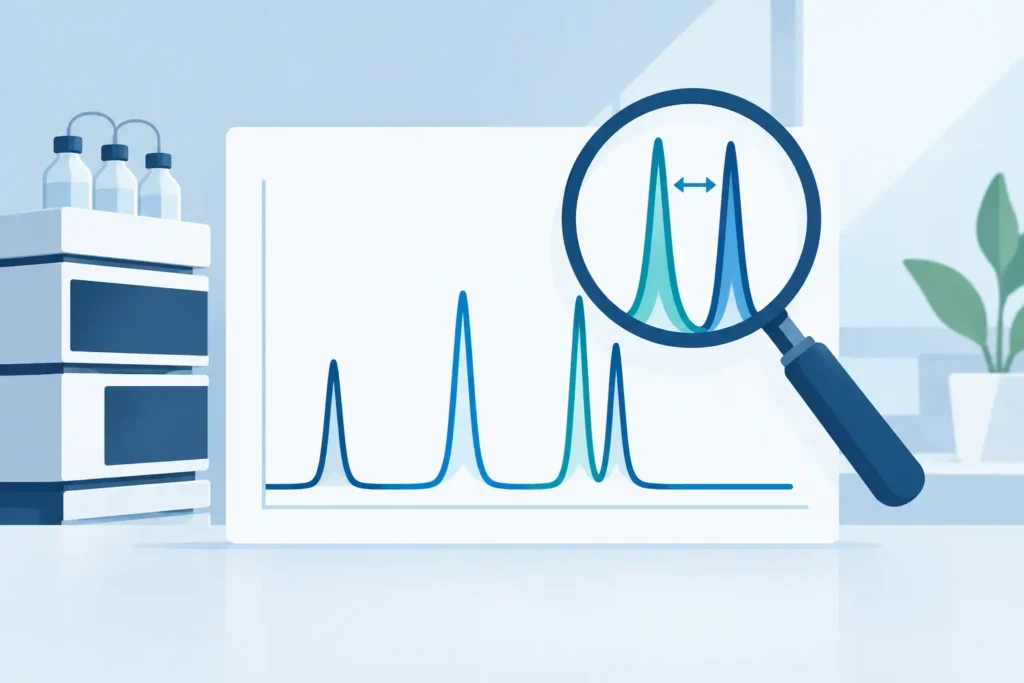
Understand resolution in analytical data, from separated chromatographic peaks to spectral detail, and build models that produce defensible results now.
Read More →
Quantitative metrics turn fitted chromatographic and spectroscopic signals into defensible models, revealing fit quality, uncertainty, bias, and resolution
Read More →
Second-derivative analysis reveals hidden spectral and chromatographic features while controlling noise, baseline artifacts, and false peak assignments.
Read More →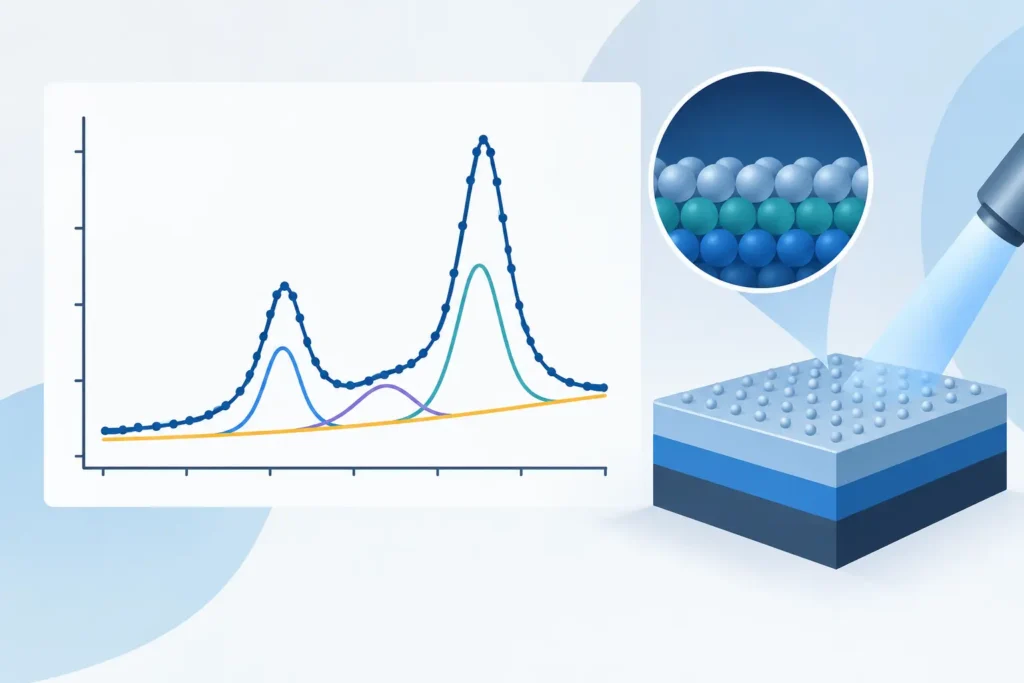
Use a Tougaard baseline to model XPS inelastic-loss structure, separate overlapping peaks, and produce defensible, reproducible quantitative XPS fits.
Read More →
Learn where genetic algorithm (differential evolution) improves nonlinear peak fitting, and where statistical validation and constraints remain essential.
Read More →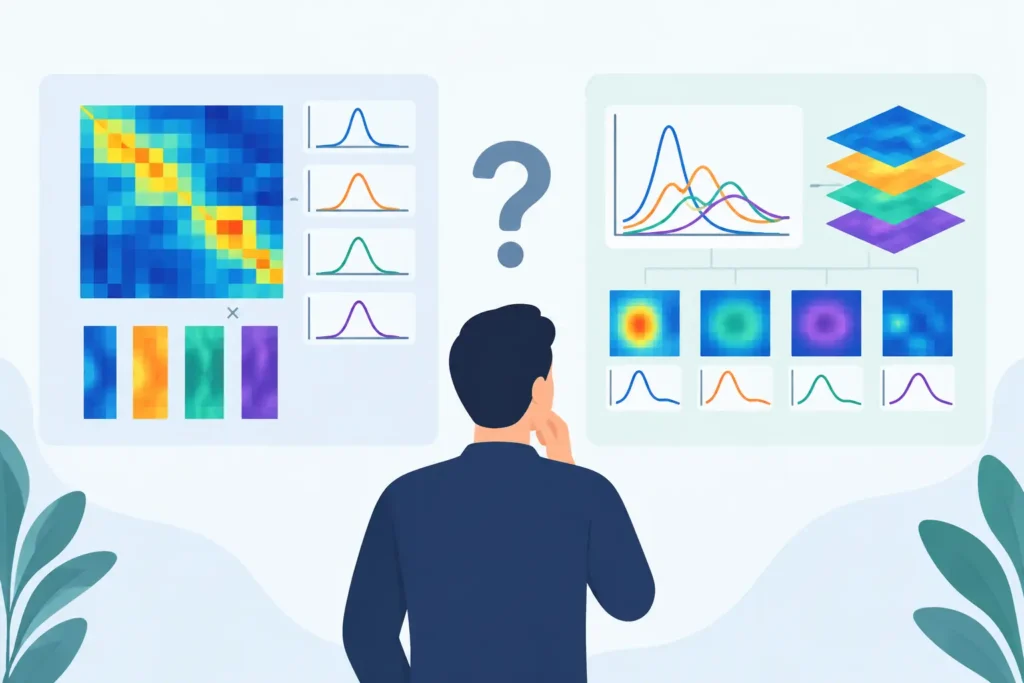
Learn how multivariate curve resolution or MCR-ALS separates overlapping chemical signals, and how to validate resolved profiles for defensible results.
Read More →
Kurtosis shows whether analytical residuals carry ordinary variation or consequential tails. Learn how to interpret it in fitted scientific data…
Read More →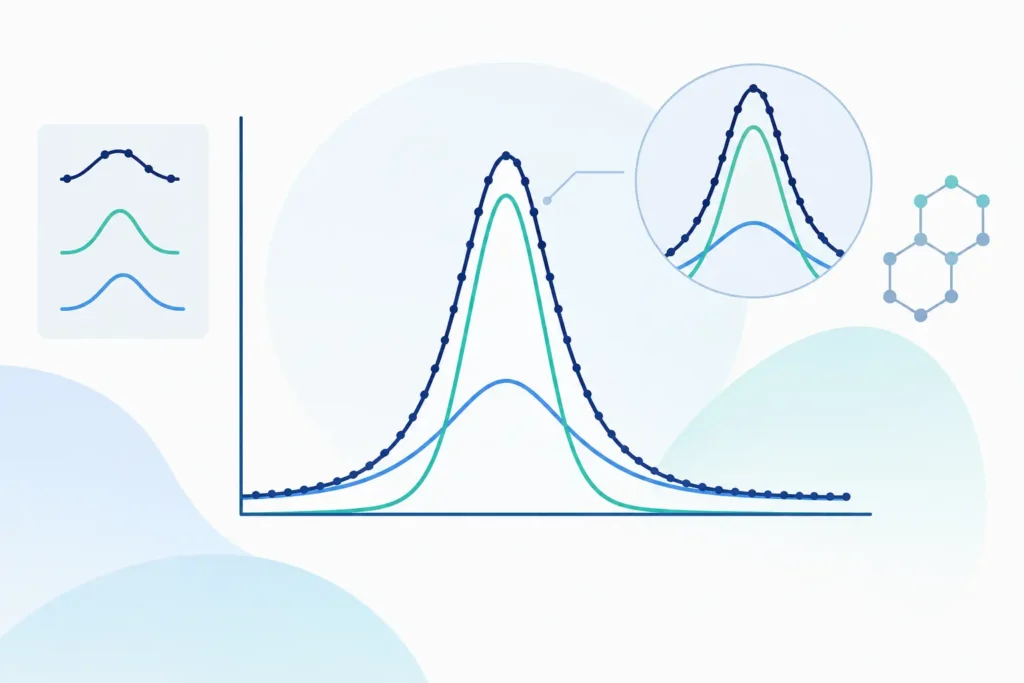
Learn how the voigt function models Gaussian and Lorentzian broadening, improves overlap resolution, and supports defensible peak-fitting results in labs.
Read More →